
Clifton City Directory Collections
Think of Clifton's directory record as a regional shelf. It is not a tidy annual series for one city. The New Jersey State Library bibliography, Gale descriptions, the Passaic County Historical Society's Clifton material, and open scans all list titles pairing Clifton with Passaic, Garfield, Wallington, Athenia, Allwood, Delawanna, Lake View, or Lodi. Search every one of those place forms. Add Acquackanonk Township for earlier years. A volume can still cover a Clifton address even when Passaic owns the cover.
| Collection | Years | Where held | Access |
|---|---|---|---|
| Clifton Passaic-area directories | 1899; 1900-03; 1904 and 1906 | NJ State Library bibliography and related collections | Confirm the exact Clifton title and shelf year |
| Clifton W.L. Richmond regional directories | 1907-17, 1918, 1924-25, 1927, 1929-30 | State-library listings, Gale reels, and selected open scans | Title-specific Clifton digital or library access |
| Passaic/Clifton directories | 1937; 1946, 1948, 1950, 1952, 1954, 1956, 1958, 1960 | PCHS Beam Library at Lambert Castle | On site, with current rules confirmed first |
| Clifton local-history collection | Exact directory shelf years not published online | Clifton Public Library Main Library and Digital Archive | Reference help and library access conditions apply |
Documented holdings do not promise a volume for every year. Gale's Clifton descriptions show gaps for 1938-45, 1947, 1955, 1957, and 1959. The PCHS table lists Passaic/Clifton coverage from 1946 through 1960, yet the official online sources publish no final continuous Clifton printing year. Treat any missing Clifton year as a gap until staff turn up a copy.
Clifton Directory Regional Titles
Clifton's earliest directory entry point is an 1899 Passaic Daily News volume. It covered Passaic City, Clifton, and Garfield. Joshua Griffith followed with Passaic directories in 1900 and 1901. He folded Clifton in alongside a rotating cast of neighboring municipalities. Griffith and Haring handled the 1902-03 volumes, while Haring or A.L. Freeman titles cover 1904 and 1906. Treat those title changes as search aids rather than proof of movement. A neighboring name appearing or vanishing from a cover says nothing about movement. It does not show whether a person left Clifton.
W.L. Richmond gives the cleanest early stretch. It runs from 1907 through 1917. A 1918 annual directory then covered Passaic, Clifton, Garfield, and Wallington. The shifting place lists are a genuine Clifton quirk. Athenia, Allwood, Delawanna, Lake View, Lodi, and Wallington each turn up in different years. Repeat any Clifton name search under the regional title. One more wrinkle: Clifton incorporated in 1917. Before that date, deeds, maps, newspapers, and street directory material may point elsewhere. The record may name Acquackanonk Township or a local place name instead.
| 1899 | Passaic Daily News issues a regional directory naming Passaic City, Clifton, and Garfield. |
|---|---|
| 1900-06 | Griffith, Haring, and A.L. Freeman titles map the changing Passaic-area market. |
| 1907-18 | Richmond volumes give Clifton changing company with neighboring place names. |
| 1924-60 | Later regional volumes appear irregularly, with documented gaps and PCHS Passaic/Clifton holdings. |
Note: A regional heading names the volume's market area, not the home city of every person or business printed inside it.
Clifton Directory at Lambert Castle
The Passaic County Historical Society directory holdings list a Passaic/Clifton run for 1937 and 1946-60. The books live in the Elizabeth A. Beam Local History and Genealogy Library at Lambert Castle, 3 Valley Road in Paterson. Around them sit county histories and compiled family material. Cemetery and church-record transcripts, newspapers, and special census resources round out the shelves. Official birth, marriage, and death certificates are not part of the collection.
Call before any research trip. The society publishes no current reading-room hours, copying terms, appointment rules, or research-service fees online. Bring a surname, every known spelling, a street name, and a short list of target years. That gives staff what they need to hunt down a volume. They can pull a regional book, a street index, a telephone directory, or a reverse section that an online catalog never shows separately.
Clifton itself keeps a research point at the Clifton Public Library's Main Library, 292 Piaget Avenue. Allwood Branch at 44 Lyall Road is the alternate for specialized access. Main's local-history room holds directories, yearbooks, maps, photographs, scrapbooks, and newspapers. Ancestry Library Edition is available for in-library use. HeritageQuest is offered under the library's access terms.
Reading a Clifton City Directory
Treat a Clifton city directory entry as a dated lead, not a modern identity record. The 1910 Richmond volume follows a pattern: surname first, then given name or initials, a trade or role, and a business or address. Shorthand like a home marker or widow notation may follow. An address might mark a residence, a shop, or a service location. Check the surrounding heading before calling any address a household. Keep the spelling exactly as printed.
| Name | Usually a surname plus given name or initials; compare every spelling variant. |
|---|---|
| Trade or role | May be abbreviated and sometimes names a business rather than a household. |
| Relationship clue | A spouse reference or “wid” notation can suggest a widow relationship, but needs corroboration. |
| Address line | May be a residence, business, or another contact address. “h” commonly marks home in the inspected regional volume. |
| Owner or renter mark | No Clifton-wide owner or renter symbol was confirmed in the inspected sources. Check that edition's own key before assigning one. |
- Criss-cross directory
- An address-first or street-order section that can lead from a location to listed occupants or contacts. A separately cataloged Clifton run was not located online, so ask library or PCHS staff for it.
- Householder index
- An alphabetical list that commonly centers on a principal listed person. It does not prove every person in a dwelling.
- Abbreviation key
- The volume's explanation of its shortened labels, often near the front. Photograph or transcribe it before reading entries.
A 1910 Clifton Directory Scan
The Internet Archive scan of W.L. Richmond's 1910 Passaic directory names Clifton among its communities and seats the Clifton directory near page 509. Its OCR is rough. Trust the page image over any copied text result.
The same volume's classified business section shows the entry pattern clearly. Chr. Bergsma appears at 82 Hadley Avenue. Miller & Hoedemaker sits on DeMott Avenue. Vincent Pordon is listed at 252 Dayton Avenue, and Prins & Rose appears at 45 Hadley Avenue. These are business listings, not proof of who shared a household. For a residential entry, use the Clifton personal section or a local scan.
Tracing Clifton Directory Households
Start from the closest known address or surname. Work one directory year at a time. The goal is a small, dated timeline, not a merger of people with similar names. A name that disappears could mean a move, death, marriage, a spelling change, an unlisted person, or irregular publication. Let the next source answer that specific question.
- Find the first likely Clifton listing, saving the title, publication year, section, exact spelling, and address.
- Read the alphabetic section and, where available, the address or criss-cross section. Record adjacent names as context, not as assumed relatives.
- Follow the name forward and backward through the documented regional volumes, including titles filed under nearby place names.
- Pair the closest directory edition with a federal census snapshot. Public federal schedules available for this work run through 1950; census and directory dates are not interchangeable.
- Use a deed, obituary, cemetery record, probate file, or newspaper notice only to test a particular move, death, relationship, or address change.
An address-first search works best in layers. A historical Clifton city directory may name an occupant at a house, and that entry can anchor a broader address history for previous residents. A deed, though, answers a different question. The recorder's parcel trail tracks ownership, not occupancy, so directory and deed evidence support each other without overlapping.
Clifton Archive Research
A Clifton city directory sometimes ends before the years you need. When that happens, the New Jersey State Archives genealogy collections open a wider door. The collections reach across older state and county material. The State Archives keeps Passaic County deed microfilm through 1900. FamilySearch adds another way into county deeds, though some images or account features carry restrictions.
State census records can fill an earlier household gap. New Jersey took its own counts, with coverage listed for 1855 through 1915. A searchable 1885 Passaic resource stands out among them. Pair it with the regional title and date, since a name under Acquackanonk or an old neighborhood label may still tie into later Clifton research.
Clifton Maps and Memory
A residents directory entry gains real strength when you pair it with maps, yearbooks, and newspapers. Clifton Public Library lists local titles such as the Herald News, Clifton Times, Clifton Journal, Clifton Leader, Dateline Journal, and Clifton Merchant. Its shelves also hold history books, maps, photographs, and scrapbooks. Newspaper databases and microfilm can test a dated entry. Yearbooks and the Digital Archive add school or community context. None of them replaces the directory itself.
The Princeton Sanborn index covers Clifton sheets from 1916, 1918, and 1935. Each sheet shows a building's footprint, materials, use, street names, and fire protection. Occupants rarely appear. Even so, Sanborn detail helps separate a home from a business address. That distinction matters in a Clifton city directory.
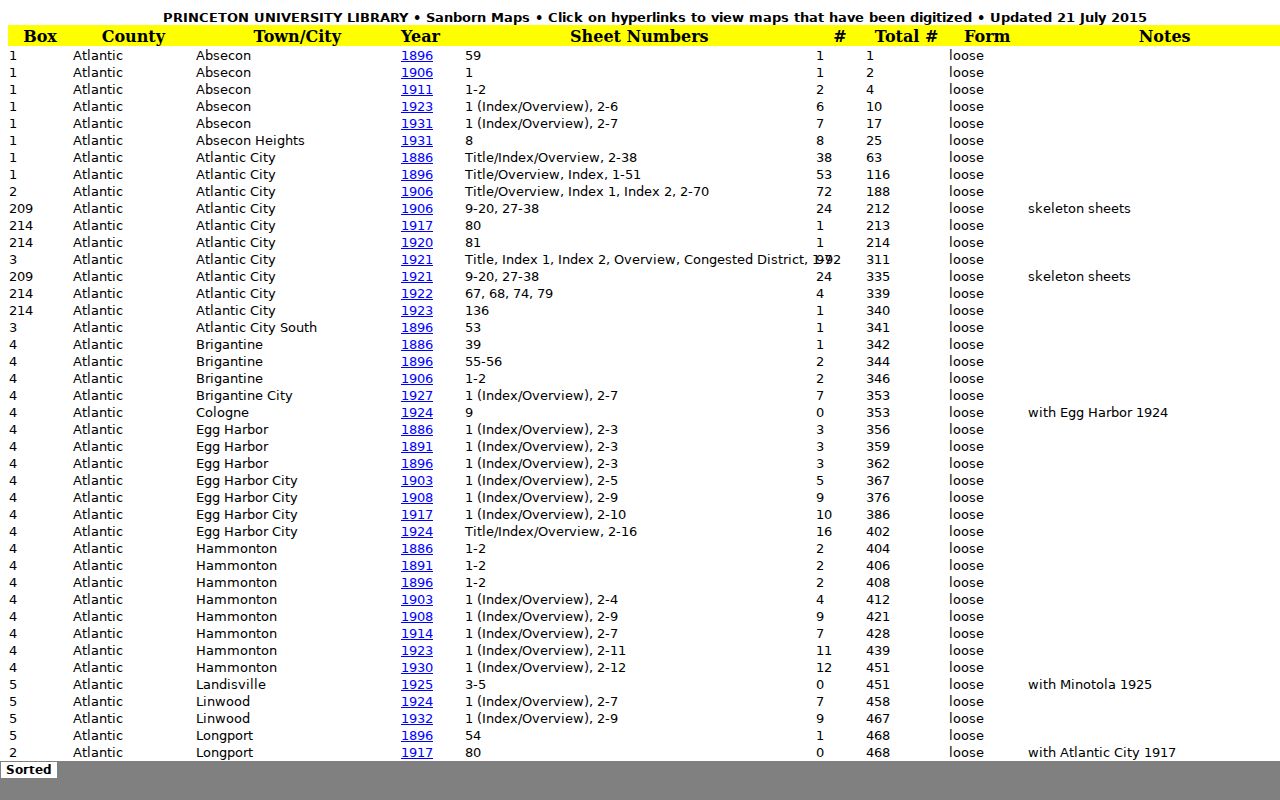
A map date and a directory date are different snapshots. Match them by year where you can. Then record the source title and page. That way another researcher can retrace the connection in the Clifton records.
Note: Clifton's historical place labels shifted over time.
Search maps and directory headings together before ruling out any record as unrelated.