
Sources for Clifton Previous Residents
One Clifton address has several time layers. The current Clifton assessment record is the starting point. The Passaic County Clerk's index for Clifton and its deeds form the ownership trail. Clifton directories and census schedules provide dated household snapshots. The older the Clifton question, the more likely the search will leave the web portal for the Registry Record Room for Clifton records, county books, State Archives microfilm, FamilySearch images, Clifton local-library material, or PCHS holdings. Keep each Clifton layer separate: an owner, a mailing contact, and an occupant do not automatically describe the same person.
| Source | Years it covers | Where held | What it shows |
|---|---|---|---|
| Clifton assessment search | Current owner and deed-list modes; historical start not located | TaxRecords-NJ portal | Owner, situs, mailing address, block, lot, class, values, and deed leads |
| Passaic PRESS index for Clifton | December 1, 2000 to present | Online County Clerk index | Clifton names, document type, date, block/lot, and instrument trail |
| Clifton PRESS deed and mortgage images | January 1, 1989 to present, with incomplete older conversion | Online first-page tier and Registry counter | Recorded document trail and legal description |
| Clifton regional directories and census | Directories from 1899 into 1960 with gaps; public federal census through 1950 | Library, PCHS, archival and licensed collections | Occupant, Clifton address, household, and timing clues |
| Older Clifton deeds, maps, and estate sources | County books generally from 1785 or county creation; Archives deed microfilm to 1900 | Registry, State Archives, FamilySearch, Surrogate | Earlier Clifton transfer, building, death, executor, and heir clues |
A recent Clifton transfer normally begins with the assessor and PRESS. A pre-address Clifton question often begins with a deed's legal description, a filed map, or an old place label. The Clifton household route starts with the closest directory or census date, not an assumption that a property owner lived on the site.
Start a Clifton Address Trail
The Clifton Tax Assessor search is the address-first stop. Search the exact Clifton property location, then save the displayed owner name, block, lot, qualifier, situs address, mailing address, class, and any deed reference. The portal has both a current assessment-owner list and a deed/SR1A list. It is a Clifton research lead, not proof that the owner lives at the property or that the assessment establishes market value.
A Clifton situs address is the physical parcel location. A mailing address is where tax notices for the Clifton parcel are sent and may be a post-office box, representative, business, or a different address. Preserve both labels. The block, lot, and qualifier are especially useful when an older deed has no familiar street number or its road description has changed.
Keep a chain row. For each Clifton document, record grantor, grantee, document type, recording date, book/page or instrument number, legal description, image status, and the next name to search.
Clifton Previous Residents in Deeds
The Passaic County Public Records Electronic Search System, known as PRESS, is the key Clifton recorded-document index. Search the current Clifton owner as grantee, select the deed, and read the grantor or seller, recording date, instrument number, legal description, and prior block or lot references. Search that seller as a grantee in the earlier period, then repeat. Use initials, married names, entity names, spelling variants, and “et al.” where the document suggests them.
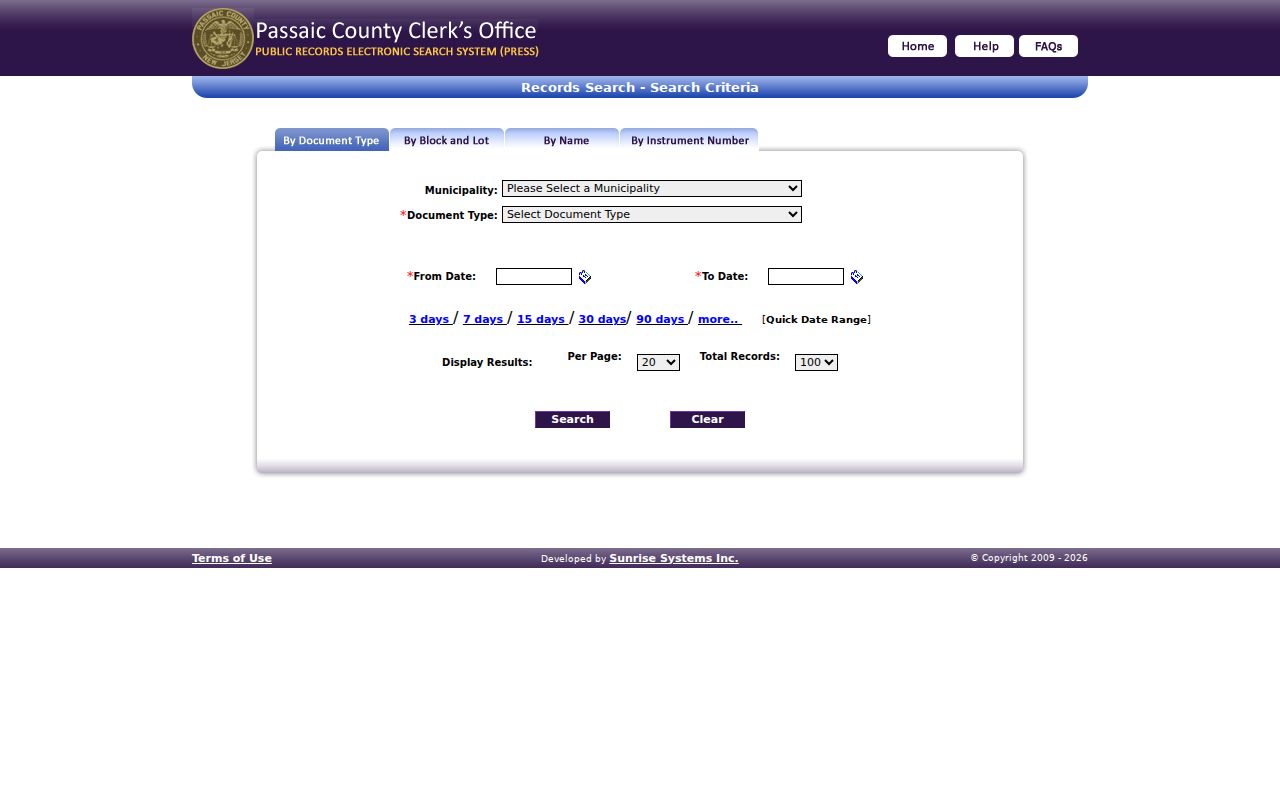
The public PRESS tier for Clifton records is free and has the full index plus a document's first page. It is not a title-search substitute. The County Clerk does not perform title searches, and a complete Clifton ownership question belongs with the Record Room or an independent title searcher. A name in a transfer marks a document party, not a conclusion about who lived at the address.
- Use the current Clifton assessment record to capture the parcel's exact block, lot, qualifier, owner, and current deed lead.
- Find the present Clifton owner's purchase deed in PRESS, then note the seller, legal description, recording data, and any Clifton filed-map reference.
- Search that seller as the earlier grantee. Compare the same Clifton legal description, not only the street number, before accepting a match.
- Repeat backward through each Clifton transfer. If a deed uses an old road, abutting owner, or subdivision language, check the Clifton filed map and map-room context.
- Stop treating the Clifton web result as complete when coverage ends, then move to the documented counter, book, microfilm, and image channels.
Clifton Records Before PRESS
PRESS indexes records from December 1, 2000 forward. Deed and mortgage images begin January 1, 1989, although older back-file conversion is incomplete. When a Clifton transaction falls before the index or image coverage, use the Passaic County Registry Record Room for Clifton records and county deed books and indexes. The State Archives has microfilm copies of county deeds to 1900, and FamilySearch has digitized county deeds with possible account or image-access limits.
The New Jersey State Archives genealogy collections are an important fallback for the older Clifton property trail. County deed books generally begin in 1785 or at a county's creation. An early Clifton document may identify a tract, road, subdivision, or neighboring owner instead of a house number. That is why the legal description and filed map remain more reliable bridge points than a modern search-box address.
Clifton research through State Archives microfilm and county books offers access routes, not a guarantee that every recorded image is immediately viewable online. Confirm copy options and any current access conditions with the custodian before relying on a date range.
Past Households in Clifton
Clifton property owners are only one part of an address history. Clifton regional directories can show a person, business, contact address, or listed household at a point in time. The documented Clifton-area run includes 1899; 1900-03; 1904 and 1906; 1907-17; 1918; 1924-25; 1927; 1929-30; 1937; and selected volumes from 1946 through 1960. The gaps matter. Do not silently turn that uneven Clifton shelf into an annual roll.
The Internet Archive scan of the 1910 W.L. Richmond Passaic directory includes Clifton and places its Clifton material around page 509. Read the page image rather than depending on the imperfect OCR, and keep the section heading with any name or address copied into an address timeline.
The scan's classified material can show a business, trade, service, telephone, and address, but it does not identify every past household. A Clifton address in a classified section should be tested in the personal listing, another directory year, and the closest census snapshot.
Pair the nearest Clifton directory date with a census date. Federal public schedules run through 1950 under the 72-year release rule. New Jersey state census material spans 1855-1915, and 1885 Passaic is searchable. Neither snapshot uses the same date as a deed, but the comparison can distinguish a Clifton owner of record from the people then recorded in a household.
- Grantor and grantee
- The grantor transfers an interest in a deed. The grantee receives it. In a backward chain, the seller named in one deed may be the buyer in an earlier one.
- Chain of title
- A linked sequence of recorded transfers for the same Clifton legal parcel. It is stronger when descriptions and map references match across the chain.
- Criss-cross directory
- An address-first or street-order directory section. A separately cataloged Clifton reverse run was not located, so ask library or PCHS staff for reverse, street, telephone, or house-directory material.
- Enumeration district
- The census taker's assigned area. It can narrow a census search once an older Clifton street and municipality label are known.
The regional titles, entry abbreviations, and documented directory gaps are explained in the Clifton city directory collections. Use an address section where one exists, then test the result against the alphabetic listing and census household.
Note: A directory occupant can be a boarder, business contact, or other listed person, so it should not be treated as a complete household list.
Clifton Previous Residents Before 1917
Clifton incorporated in 1917 from Acquackanonk Township. Earlier deeds, directory headings, maps, and local news may use Acquackanonk, Clifton village, Lake View, Athenia, Allwood, Delawanna, or another regional label. The changed wording is a search condition, not proof that an address moved. Search the parcel description and nearby place names before rejecting a record.
Clifton's 1913 historical-news archive records debate over the proposed annexation or disposition of portions of Acquackanonk Township and names Clifton, Delawanna, Richfield, Albion Place, Athenia, and Botany. That local story explains why older records can use competing jurisdiction words. A current city name placed over an old document can hide rather than solve the connection.
Clifton Addresses on Sanborn Maps
Clifton Public Library does not publish a standalone house-history guide in the sources reviewed. It does hold the ingredients: local directories, yearbooks, maps, newspapers, history books, scrapbooks, photographs, Ancestry Library Edition, and HeritageQuest. Ask reference staff for an address, a directory year, and a map year rather than expecting a ready-made property narrative.
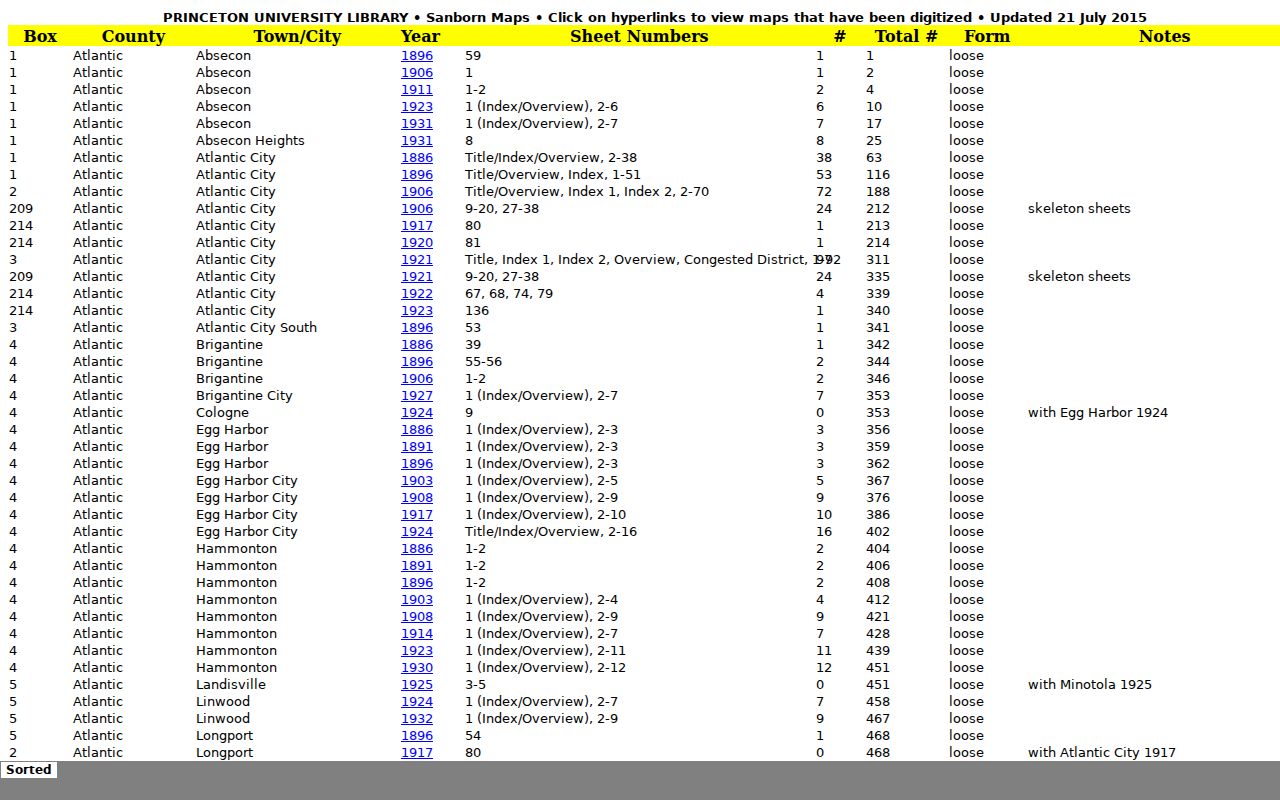
The Princeton Sanborn index lists Clifton for 1916, 1918, and 1935. Sanborn sheets can show a structure's outline, materials, height, use, street name, water service, and other physical context. They establish a building or business presence on a street, not the names of everyone who lived there.
The Hamilton House Museum offers a local research model. Its history combines artifacts, deeds, manuscripts, maps, photographs, and wills, and records the Hamilton family's 1856 purchase of the larger property and the house's 1973 move to Surgent Park. That kind of evidence joins a property story without assuming a present address has remained physically or legally unchanged.
Finishing Clifton Address History
When the deed and directory trail reaches an unexplained break, address-specific permit records can date construction, an addition, demolition, or a change in use. Clifton's Building Department has permits, certificates of occupancy or approval, inspections, and related records, but no official public online permit search was located. A focused OPRA request should include the address, block and lot, permit type, and date range.
For a death or estate transition, Clifton Public Library newspaper resources, PCHS abstracts, cemetery material, and the Passaic County Surrogate can supply a narrower next step. Surrogate files may identify a decedent, date of death, executor or administrator, will, beneficiaries, and heir addresses. The online surrogate index is only an index; paper file or copy requests go through the office. These are leads for genealogy and estate research, not a current contact list.
Lawful personal use. Clifton previous-resident research is appropriate for family history, house history, estate questions, and personal curiosity. Do not use any record to track, threaten, harass, or harm a living person.
Note: A permit, obituary, or probate entry can explain a date in the chain, but none replaces the deed's legal description for parcel continuity.